
Table of Contents
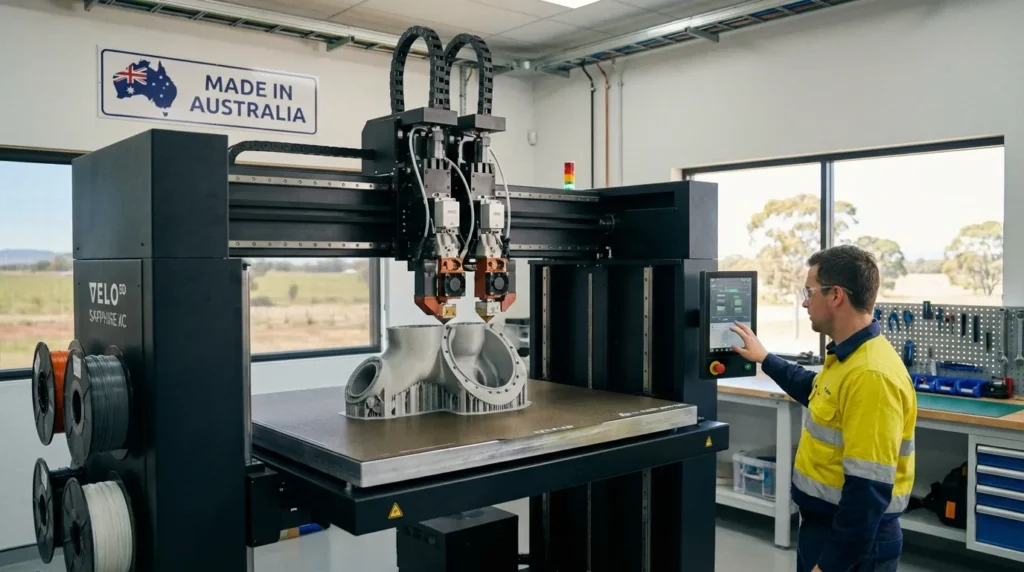
Industrial 3D Printing Maintenance Guide for Maximum Reliability
Industrial 3D printing has moved far beyond the realm of hobbyists and into the core of manufacturing workflows across Australia. With high-speed, high-precision FDM systems now producing tooling, prototypes, and production-grade parts, reliability is no longer optional, it’s mission-critical. Yet even the most advanced industrial FDM printers, such as RatRig V-Core systems equipped with IDEX dual extrusion, require disciplined maintenance to deliver consistent results and avoid costly downtime.
This guide takes you through proven maintenance strategies for industrial 3D printers, tailored for Australian engineers, manufacturing professionals, and technical educators. We’ll cover daily to annual upkeep routines, common pitfalls, AI-driven predictive care, and trends shaping the future of industrial 3D printer maintenance.
In 2025, additive manufacturing will continue its evolution towards fully integrated production systems, where AI, automation, and post-processing are seamlessly connected to deliver faster, more sustainable, and higher-quality parts.
Establishing a Maintenance Mindset for Industrial 3D Printing
A well-maintained industrial FDM printer can operate continuously for thousands of hours without a significant drop in quality. This is especially important when producing high-tolerance aerospace components or precision medical devices in Australia’s growing industrial 3D printing sector. According to recent industry surveys, the global industrial 3D printing market is projected to grow at a CAGR of 18, 22% between 2025, 2030, driven by localized manufacturing and AI-driven optimization.
Daily routines such as cleaning the print bed, checking nozzle health, and ensuring filament is properly stored can prevent minor issues from becoming production halts. Weekly and monthly checks, including lubrication, belt inspection, and firmware updates, keep systems at peak efficiency. Cultivating this mindset within your team ensures that operators treat maintenance as an integral part of production rather than an afterthought. In many facilities, maintenance logs are digitized and integrated into quality control systems, making it easier to track wear patterns and predict potential issues. By embedding these practices into standard operating procedures, organizations can minimize variability in output quality and maximize machine availability.
| Maintenance Interval | Key Actions | Impact |
|---|---|---|
| Daily | Clean bed, check nozzle, verify filament dryness | Prevents adhesion issues and clogs |
| Weekly | Lubricate rails, inspect belts, calibrate | Maintains mechanical precision |
| Monthly | Firmware updates, nozzle replacement | Optimizes performance and reduces wear |
| Annual | Replace bearings, belts, full alignment | Restores factory-level accuracy |
As shown above, aligning maintenance with a strict schedule not only extends printer lifespan but also ensures consistent quality across different production batches, which is vital when fulfilling contracts with tight tolerances and delivery deadlines.
Daily and Weekly Industrial 3D Printing Maintenance Essentials
Daily maintenance for industrial FDM printers should focus on cleanliness and readiness. Remove debris from the print bed to ensure first layer adhesion remains optimal, especially for high-speed jobs where imperfections can compound rapidly. Inspect the nozzle visually; if material build-up is visible, perform a cold-pull cleaning to maintain extrusion quality. Keeping the workspace around the printer clean also reduces the risk of dust contaminating prints or clogging cooling fans.
Weekly tasks involve mechanical care. Lubricate linear rails and lead screws using manufacturer-approved lubricants to reduce friction and wear. Inspect belts for tension and signs of fraying, belt slippage can cause dimensional inaccuracies in parts. Calibrate extrusion steps and bed leveling to maintain precision across long production runs. It’s also wise to check filament feed mechanisms for wear, as consistent feeding ensures smooth extrusion and prevents under-extrusion defects. Scheduling these checks at the same time each week helps build a routine and prevents oversight.
By integrating AI and simulation into the 3D printing process, manufacturers can reduce time-to-market, minimize waste, and gain greater confidence in part reliability before production begins.
For those working with multi-material systems, such as an IDEX dual extrusion 3D printer, weekly calibration is critical to prevent cross-contamination between materials. This includes purging unused material from nozzles and verifying that tool change operations are smooth and precise, especially when printing functional prototypes where material interfaces must be flawless.
Monthly and Annual Industrial 3D Printing Upkeep for Peak Performance
Monthly maintenance is your opportunity to catch deeper issues. Updating firmware and slicer profiles ensures that your printer benefits from the latest optimizations, especially important if you’re using Klipper firmware for speed and precision gains. Replace worn nozzles, particularly if you print abrasive materials like carbon-fiber composites, which can erode brass nozzles quickly. In addition, examine wiring harnesses for wear or loose connections, as these can cause intermittent faults during long prints.
Inspect cooling fans, filters, and electronics for dust buildup. Clean or replace filters to prevent overheating, which can impact print consistency. Annual servicing should include replacing bearings, belts, and hot-end assemblies. Conduct a full gantry alignment and validate machine accuracy using metrology tools or benchmark test prints. Many companies also choose to re-lubricate or replace stepper motors during annual maintenance to prevent gradual performance decline. Documenting each annual service not only helps in warranty claims but also provides valuable data for long-term asset management.
This annual deep dive restores the machine to near-factory condition, ensuring it remains competitive against newer models. It also provides an opportunity to retrain staff on updated maintenance procedures, ensuring that knowledge gaps don’t develop over time.
Leveraging AI for Predictive Industrial 3D Printing Maintenance Technologies
The integration of AI-driven predictive maintenance is transforming industrial 3D printer upkeep. Sensors can monitor vibration, temperature, and extrusion pressure, predicting wear before it leads to failure. This approach reduces unplanned downtime and aligns maintenance with actual usage rather than arbitrary schedules. AI algorithms can analyze hundreds of data points per print, identifying subtle patterns that indicate a component is nearing the end of its service life.
In Australia, localized manufacturing hubs are adopting predictive systems to keep printers online longer and reduce reliance on overseas service parts. This is particularly beneficial for industries that operate in remote regions, where shipping delays can halt production. Predictive maintenance can also integrate with inventory systems to automatically order replacement parts before they are needed, ensuring zero-delay repairs.
For hybrid manufacturing environments, where CNC and 3D printing are combined, predictive care ensures seamless operation between machines. Learn more about these workflows in Exploring Hybrid Manufacturing. In such setups, AI can coordinate maintenance schedules so that downtime for one machine coincides with downtime for others, maximizing overall productivity.
Material Considerations in Industrial 3D Printing Maintenance
High-performance polymers like PEEK and ULTEM demand precise extrusion temperatures and specialized hot-end maintenance. Using incorrect cleaning agents or failing to inspect the hot end regularly can lead to costly repairs. For abrasive materials, hardened steel or ruby-tipped nozzles are recommended, but these too require periodic inspection for wear. In cases of metal-filled filaments, even hardened components can degrade faster than expected, making scheduled inspections essential.
Filament storage is equally important, moisture can degrade material properties, leading to brittle prints and poor adhesion. Industrial users should invest in sealed, humidity-controlled storage systems. For large-scale operations, automated filament drying cabinets can be integrated directly into the printer feed system, ensuring optimal material quality at all times. For detailed advice, see our Complete Guide to 3D Printing Filaments. By aligning maintenance routines with the specific demands of each material type, manufacturers can avoid common pitfalls such as inconsistent extrusion or warping.
Future Trends Shaping Industrial 3D Printing Maintenance
Industry experts anticipate a future where maintenance schedules are fully integrated into MES (Manufacturing Execution Systems), automatically logging printer usage and scheduling preventative care. This automation will reduce human error and ensure consistent performance across fleets of machines. Advanced MES integrations may even allow operators to compare maintenance performance across different facilities, identifying best practices that can be standardized company-wide.
Sustainable practices are also becoming standard. Recycling filament waste, using biodegradable cleaning agents, and optimizing energy consumption are now part of modern maintenance strategies. These not only reduce operational costs but also align with corporate sustainability goals. Many manufacturers are now tracking the carbon footprint of their additive manufacturing processes, and efficient maintenance plays a key role in reducing energy waste.
In Australia, regional service hubs are expected to expand, providing faster access to replacement parts and specialized technicians, further reducing downtime. As government and industry partnerships grow, training programs will likely emerge that focus specifically on advanced maintenance skills for industrial additive manufacturing, ensuring a steady pipeline of qualified technicians.
Building Your Success with Reliable Industrial 3D Printing Maintenance
Industrial 3D printing offers unmatched flexibility and speed, but these advantages hinge on disciplined maintenance. Daily cleaning, weekly mechanical checks, monthly firmware updates, and annual overhauls keep your machines delivering production-grade results. A structured approach not only prevents breakdowns but also builds confidence with clients who rely on consistent quality.
By adopting predictive maintenance technologies, tailoring care to material requirements, and staying ahead of industry trends, you can extend the lifespan of your equipment and maximize ROI. Whether you’re producing aerospace tooling or medical prototypes, a proactive maintenance strategy ensures your industrial FDM printer remains a reliable asset. Regular operator training, combined with documented maintenance records, also supports ISO and other quality certifications, which can be a competitive advantage.
For Australian manufacturers, the path forward is clear: combine technical excellence with consistent upkeep, and your industrial 3D printing operation will thrive in 2025 and beyond. By embedding maintenance into the culture of your organization, you create a foundation for innovation, efficiency, and long-term success in the rapidly evolving world of additive manufacturing.
