
Table of Contents
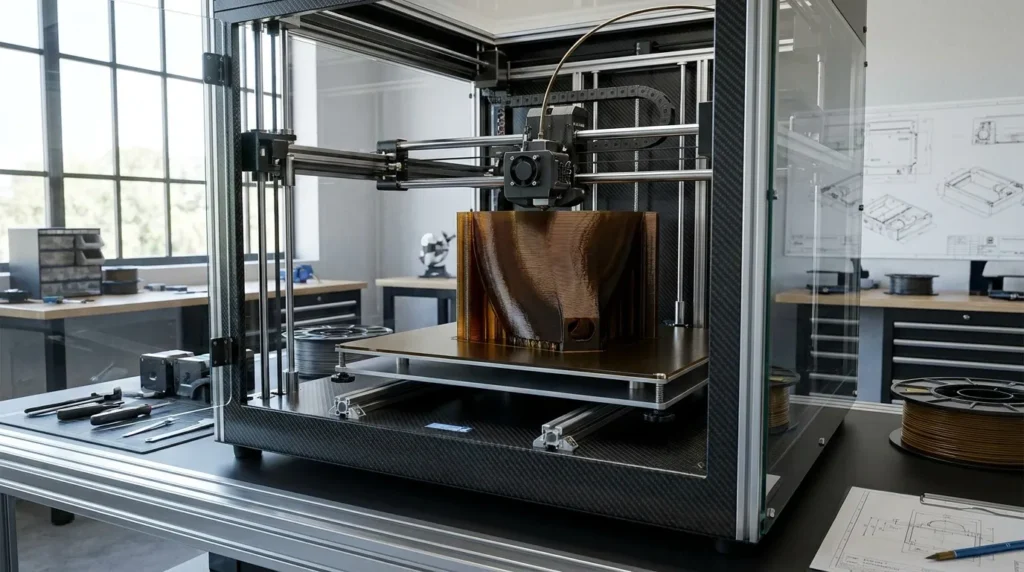
High-Temperature Thermoplastics: The Future of FDM 3D Printing
Industrial 3D printing has moved quickly over the past few years. What once made sense mainly for simple prototypes is now often used for real production parts that see daily work. That change surprised many people. One of the main reasons is the rise of high-temperature thermoplastics. These materials let FDM 3D printers produce parts that handle heat and chemical exposure much better than the standard filaments most users are familiar with. For many teams, this was the moment when production use started to feel practical instead of experimental.
For engineers and manufacturers in Australia, this shift already matters. Industries such as mining, rail, aerospace, and defence depend on parts that can handle heat, chemicals, and constant wear. Speed and shop-floor flexibility also matter more than people sometimes expect. Tight timelines are common, and waiting weeks for machined parts can drive costs up fast. FDM printers using high‑temperature thermoplastics can shorten the move from design files to parts in use.
This article explains what high‑temperature thermoplastics are and why they matter for production. It looks at how they are changing FDM 3D printing in real, practical ways, with a focus on material performance, printer needs, common mistakes, and future trends.
What Makes High-Temperature Thermoplastics Different
High-temperature thermoplastics are made for situations where standard plastics usually fail, the truly tough spots. Materials like PEEK, PEKK, PPSU, and ULTEM keep their strength as temperatures climb. Many also resist chemicals and long-term wear, and they often deal with repeated stress better than everyday plastics. That mix matters most in demanding industrial settings, where heat, load, and exposure all show up at once. In real-world use, that’s where these materials build their reputation.
Heat resistance by itself doesn’t explain everything, though. This part often gets overlooked. These polymers usually keep their shape and act in more predictable ways over long service lives. Engineers often choose them because the material doesn’t move much under load. Over time, it also reacts more consistently to vibration and thermal cycling. That kind of stability usually means fewer surprises, which often leads to fewer failures in parts people rely on.
The market data points to strong growth, and that isn’t very surprising. FDM 3D printing is being used more widely, and demand for advanced filaments keeps rising across industrial sectors. For now, that momentum shows no clear signs of slowing.
| Market Segment | Market Size | Growth Rate |
|---|---|---|
| FDM 3D printers | USD 3.07 billion | 21.8% CAGR |
| High-temperature 3D printing plastics | USD 795 million | 13.3% CAGR |
| 3D printing filament overall | USD 1.95 billion | 17.0% CAGR |
Compared to PLA or PETG, these materials need much more heat during printing, often significantly more. Nozzle temperatures can go past 400°C, and heated chambers are usually needed to reduce warping and cracking. The hardware requirements are higher, but the payoff is parts that can replace metal in certain low-volume applications.
For industrial users, the real value usually comes down to function. These aren’t decorative parts. They’re working components built to handle heat, mechanical loads, and regular chemical exposure, day after day. Many also meet required compliance standards, which in most regulated environments isn’t optional.
Printer Requirements for High-Temperature FDM Printing
Not every FDM 3D printer can handle high-temperature thermoplastics, and many people learn that the hard way. Running these materials through the wrong machine often leads to failed prints, wasted filament, and plenty of frustration. In most cases, it’s not a setup mistake, the printer just isn’t built to handle what the material needs.
The hot end is usually the first limit people run into. Many advanced filaments require extrusion temperatures above 400 °C that stay steady for hours, not short spikes that only look good in the specs. At those temperatures, standard brass nozzles wear out quickly. That’s why hardened steel or specialty alloy nozzles are usually the practical option, not a nice-to-have upgrade.
The build chamber and motion system also matter more than many expect. An actively heated chamber keeps the whole part at a more even temperature, which often cuts down on warping and cracking in tall or thick prints. Without that control, issues often show up halfway through a long job. The motion system matters too. High-temperature filaments are stiff and push back during extrusion, and less rigid frames can struggle. That can lead to skipped steps or uneven surface quality, small issues that quickly become annoying.
Electronics and sensors matter just as much. Accurate thermistors and stable power help keep temperatures consistent during long prints, which often makes the difference when repeatable mechanical performance is needed.
This is where industrial-focused systems usually perform better. Rigid frames and dependable electronics, often paired with firmware like Klipper, offer both speed and precise control. Many Australian professionals choose solutions from Raven 3D Tech because these machines focus on thermal stability and accuracy rather than casual hobby use, built for demanding work, in a very literal way.
Real-World Industrial Applications and Use Cases
High-temperature thermoplastics are no longer stuck in a test lab. Many companies now depend on them for tooling, fixtures, jigs, and real end‑use parts that stay in service every day, not just during short trials. These aren’t prototypes anymore. What used to be a temporary fix has often become part of regular production, and that change has shifted how teams plan and run their work.
Some of the most visible uses are in aerospace and transport. Lightweight brackets and ducts are common because they handle heat while keeping weight down, which is usually the main goal. In mining and rail, the use looks different but is just as practical. Custom fixtures and protective guards are printed to hold up in dirty, abrasive environments where standard plastics fail fast, and longer service life is now expected.
Across manufacturing, these materials also show up as mould inserts, electrical housings, maintenance spares, and short‑run replacements. Printing parts when needed cuts inventory costs and helps replace hard‑to‑find components, especially older ones that aren’t stocked anymore.
Use keeps increasing as material performance improves. Some grades handle short exposure near 350°C, while others resist chemicals that would damage metals or softer plastics. The real shift is that printed parts can now replace aluminium in low‑volume work without losing reliability.
| Material | Heat Resistance | Typical Use |
|---|---|---|
| PEEK | Up to 350°C short-term | Aerospace and tooling |
| ULTEM 1010 | 213°C HDT | Jigs and fixtures |
| PPSU | High chemical resistance | Medical and industrial |
Treating these materials like standard filament is a common mistake. Print speeds often need tuning. Cooling settings usually change, sometimes staying off completely. Dry storage matters more than many expect, since moisture can ruin print quality quickly and you’ll see it right away.
Teams that focus on process control usually get clear results. Lead times drop from weeks to days, design changes move faster, and local production becomes realistic. That flexibility matters most when a replacement part is needed tomorrow, not next month.
Speed, Precision, and Thermal Management
High-temperature printing is often faster than people expect, and that still surprises many (it caught me off guard the first time I saw it too). With optimized material formulas, research shows print times can drop by up to 70 percent while strength often stays about the same. This usually happens because the material flows more evenly, so the printer spends less time stopping to fix issues during the print.
Thermal management sits at the core of this. When heat stays stable inside the build chamber, printers can move faster and layers are more likely to bond well, even during long runs with tough materials. High-speed FDM 3D printers support this with rigid frames, accurate motion systems, and firmware tuned to the machine’s real limits instead of generic settings. In my view, there really aren’t any shortcuts here.
Strong temperature control also helps with precision. Warping often goes down, layers line up better, and hole sizes stay closer to spec, which matters for tooling or parts that need to fit together later. Those small details often make assembly easier.
More advanced thermal setups push this even further. Zoned chamber heating and controlled airflow help keep conditions steady on large builds, so material behavior stays consistent from start to finish. That’s why many professionals look at the full system, hot end design, insulation, sensors, and firmware tuning all working together. Klipper firmware is a common choice because it allows fine control and real-time adjustments. Everything is connected.
Getting Started with High-Temperature Materials
Working with high-temperature thermoplastics doesn’t have to feel overwhelming, even if it can look that way at first. Having a clear plan usually makes the process smoother, and keeping things simple often helps more than people expect. There’s rarely a real need to rush. Moving step by step is usually enough, and it often avoids extra headaches later.
Rather than trying everything at once, a helpful approach is to pick one material that actually fits the job. When heat resistance and strength match a real use case, testing feels more focused instead of random (we’ve all been there). That kind of direction often pays off in the long run.
Before printing, it helps to get the setup and materials ready together. A high-temp hot end, hardened nozzle, heated chamber, and better insulation may be required. Storage matters too. High-performance filaments can absorb moisture fast, so dry boxes and controlled storage usually matter more than people think.
Why start big right away? Smaller test parts usually reduce waste and make it easier to dial in temperatures and speeds. Bigger prints can wait.
As you move forward, it helps to write down settings, results, and short notes. Keeping track of what worked and what didn’t often makes repeat prints much less frustrating later on.
Where Industrial FDM Is Headed Next
The future of FDM 3D printers is closely tied to material science. As thermoplastics keep improving, the range of real‑world uses often grows with them. That’s why more companies are moving past test parts and into jigs, fixtures, and end‑use housings. It reflects a wider move toward production work, and it’s usually happening faster than many people expected.
One of the more interesting changes is the push toward distributed manufacturing. Instead of relying on long shipping chains, parts are increasingly made closer to where they’re needed. This approach suits Australia well. Long distances, higher freight costs, and complex supply chains can quickly turn small delays into serious problems, so local production is often a practical answer rather than just a trend.
Automation and smarter software are shaping what comes next for FDM. Closed‑loop control systems are becoming common on industrial machines. By reading sensor data during the print, often hundreds of times per second, these systems adjust temperature, speed, cooling, and flow in real time. The result is usually less trial and error and fewer failed prints.
Hybrid systems are also becoming more common. Combining FDM printing with CNC finishing works well in many industrial settings. Parts are printed quickly, then tighter tolerances are added only where they matter most, like mounting faces, holes, and edges.
For engineers and educators, this is often a good time to build new skills. High‑temperature thermoplastics are moving from a niche option to a core manufacturing tool, and in most cases, that shift is here to stay.
The Bottom Line for High-Performance Printing
High‑temperature thermoplastics are expanding what FDM 3D printers can handle. Printing is moving away from simple prototypes and into everyday production parts such as brackets, enclosures, and tooling components. For Australian industries, this often means shorter lead times, better cost control, more design freedom, and fewer tooling delays, especially early in the design cycle.
Good results usually come down to the whole setup working together. Material choice matters, but so do the printer, thermal control, and system tuning. When these elements work well together, FDM earns its spot on the factory floor, often alongside other manufacturing methods.
If high‑speed, high‑precision printing is on the table, an honest review of the current setup helps. Starting small can make a real difference. Focused trials, small tests, and gradual expansion tend to save both money and frustration over time.
Industrial FDM is already doing real work today. It runs hot, moves fast, and delivers parts that matter.
