
Table of Contents
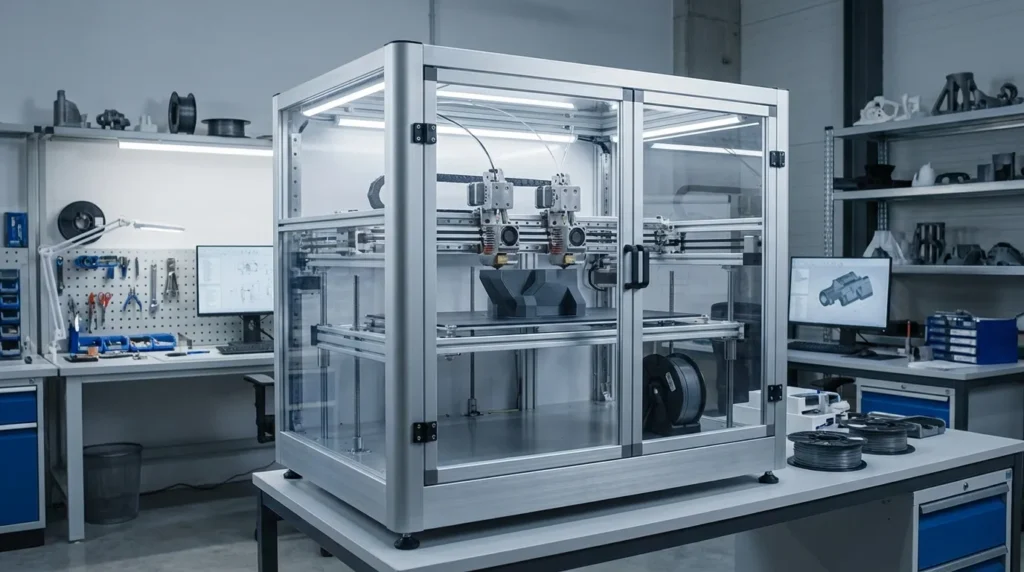
FDM 3D Printer Maintenance Strategies for High Precision
High‑speed, high‑precision FDM 3D printers already show what they can do. Teams use them to move faster, test ideas earlier, and even make end‑use tooling, which is a real win. That speed is fun to watch. The downside shows up just as fast. Precision only lasts when the machine is cared for properly. Skip that, and problems pile up quickly. Prints fail. Time slips away. Costs creep in that nobody planned for. Effective FDM 3D printer maintenance ensures this precision stays consistent over time.
For industrial engineers, educators, and advanced users across Australia, this is very real. Many workshops rely on FDM printers every day, and some run them nonstop. Enclosed CoreXY and IDEX systems, often paired with Klipper‑driven platforms, push hard on speed and accuracy. Output goes up, but wear does too. That balance needs attention.
This guide looks at important FDM 3D printer maintenance, explained clearly and without fluff. It covers mechanical care, calibration habits, thermal control, materials handling, and future trends, all based on real‑world use rather than theory.
Why Preventive FDM 3D Printer Maintenance Matters in Industrial Printing
In industrial FDM environments, small issues rarely stay small. Downtime can spread across schedules and budgets in a single afternoon, stopping prototyping or pushing tooling jobs off track. Even short delays cause a chain reaction that adds up fast, especially when several teams are waiting on parts.
Hardware makes up most of the system cost in a market that’s growing fast. That investment adds up sooner than expected, and regular maintenance helps protect it while keeping output consistent over time.
| Metric | Value | Year |
|---|---|---|
| Global FDM market size | USD 3.26 billion | 2026 |
| FDM market growth rate | 20.74% CAGR | 2026, 2031 |
| Industrial 3D printer market size | USD 20.8 billion | 2026 |
As fleets grow, maintenance moves from one-off fixes to planned, repeatable routines. Some industrial FDM platforms require more than 50 inspection points each year, covering motion systems, extrusion paths, calibration, and overall cleanliness. Skipping steps often shows up later as lost accuracy or reliability.
In the long run, a properly maintained printer is simply easier to run, more efficient, less trouble, offers better prints and provides a higher ROI.
High-speed machines raise the stakes. Faster motion increases vibration, wears belts sooner, and adds heat stress across components. Without regular checks, accuracy drops quickly, and you notice it right away.
Mechanical Systems: Motion, Belts, and Structural Stability in FDM 3D Printer Maintenance
Print accuracy depends on the motion system. Rails, belts, lead screws, and the frame usually work in the background, but only if they stay in good shape. Small changes don’t stay small for long. A slight shift can turn into layer misalignment or parts drifting out of tolerance, and those issues show up quickly.
Belts are often the first source of problems. Over time, they stretch, and step accuracy drops. Parts may come out a bit undersized or slightly skewed. On CoreXY setups, including RatRig V-Core, style systems often used in professional shops, checking belt tension is normal upkeep. Skipping it almost always shows in print quality.
Lubrication matters just as much. Linear rails and rods need fresh lubricant after a few hundred print hours. Dry rails add friction, which causes vibration and rougher surfaces. Wear speeds up too, leading to extra cost and downtime that’s easy to avoid.
Rather than guessing, many teams track print hours and plan maintenance around that. Some check monthly, others after heavy production runs. The workload sets the pace.
Higher speeds raise the risk. Strong acceleration puts more stress on the frame than expected. If bolts loosen or motors aren’t mounted cleanly, ringing shows up. A quick torque check on frame bolts can save hours of troubleshooting later.
Thermal and Extrusion Control for Consistent Accuracy
High‑precision 3D printing relies heavily on stable heat. Even small temperature shifts change how material flows and how well layers stick, which can quietly alter final part size. With filled or engineering‑grade filaments, the margin is even smaller, and heat control allows less room for mistakes.
Nozzles also wear out faster than many users realize. Carbon‑fibre and glass‑filled materials slowly widen the nozzle opening, which changes extrusion width and softens fine details over time. This happens gradually, so it’s easy to miss. Regular checks and planned nozzle swaps help keep output consistent across long production runs, not just one‑off prints.
Hot‑end sensors can drift as well. A printer may show the right temperature while actually running a bit hot or cool. Periodic temperature checks help keep tolerances tight and lower the risk of failures during long jobs.
Enclosed build chambers matter too. Stable chamber heat reduces warping and helps layers bond on larger parts. Filters and fans also need care, since dust buildup limits airflow and causes uneven internal temperatures.
There’s a short video here showing how thermal setup and extrusion tuning affect precision on fast FDM machines.
Calibration Discipline: Turning Good Machines into Reliable Tools
Calibration sits right where regular upkeep meets real accuracy. Even machines that have been running fine for weeks can drift if calibration isn’t kept up, and skipping it almost always shows up later as wasted prints.
The work itself is familiar: Z-offset checks, bed tramming, flow calibration, and checking input shaping. These steps aren’t optional after a material change or a print-head swap. That’s when small shifts tend to sneak in.
Industrial teams often use gauge parts to catch issues early. A simple calibration cube or stepped gauge, checked at the start, can show drift before it grows into a bigger failure. Spotting those early signs saves time.
| Calibration Task | When to Perform | Impact on Precision |
|---|---|---|
| Z-offset | After nozzle or surface change | First-layer accuracy |
| Flow rate | New filament batch | Dimensional accuracy |
| Input shaping | Speed profile changes | Surface quality |
Problems usually start when teams trust auto-leveling without checking the results or skip calibration during material changes. Automation can speed things up, but it still needs a human check to stay reliable.
The importance of avoiding down-time is huge for most manufacturers and factors into both production planning and a smooth workflow for printing prototypes.
Materials Handling and Environmental Control
Filament quality is closely tied to regular upkeep, but it’s easy to overlook. That happens a lot. When filament is stored badly, it slowly absorbs moisture. You’ll notice it fast through popping sounds during printing and layers that turn out weak and unreliable.
Production-grade work doesn’t leave much space for relaxed storage habits. Controlled storage is the norm, especially in busy shops. Dry cabinets that keep humidity under 20 percent are common, and filament stays sealed until it’s needed, even between print jobs.
Reliable results also depend on the area around the printer. Small things matter. Dust buildup and temperature changes can quietly hurt print quality. Enclosures help keep things stable, but only if filters are checked and replaced on a regular schedule.
Australian workshops face extra challenges. Seasonal changes can be rough. Summer heat and humidity raise moisture risks, while winter often brings sharp temperature drops overnight.
Advanced Trends: Predictive Maintenance and Future-Proofing
Maintenance strategies are changing fast, especially on busy shop floors. Industrial FDM systems now use sensors and software to track wear and performance during daily production, basically keeping watch on machines while they run. This change lets teams plan maintenance earlier instead of reacting after problems appear, which helps prevent slowdowns you would otherwise notice right away.
Analysts at Global Market Insights report that more industrial platforms are adding AI-based monitoring. These tools spot vibration shifts or thermal drift before failures happen, even while machines keep running. This leads to fewer surprises and clearer warning signs for operators.
All of this supports lights-out manufacturing and automated print cells, but higher speed also raises expectations. High-speed modes mean longer hours and more jobs, which leaves less room for skipped or late maintenance.
It will be interesting to see how powder bed players respond to the industrialisation of simple FFF printers in 2026.
For businesses investing in systems from https://raven3dtech.com.au/, future-proofing begins during upgrade planning. After upgrades roll out, firmware tuning and IDEX calibration shape long-term reliability, and the small tweaks often make the biggest difference.
Putting FDM 3D Printer Maintenance into Practice
Good maintenance habits are what turn FDM printers into reliable production tools. A clear checklist helps, especially when it sits right next to the machine. Tracking print hours and logging issues keeps small problems from slipping through. Training operators to spot early warning signs pays off fast, jams, drift, and wear show up sooner, when they’re easier to fix. It’s simple, and it works.
The biggest gains usually come from the basics. Motion systems and calibration affect accuracy and speed, so they should come first. Thermal stability comes next. Material handling and environmental control follow after that. None of this is flashy, but the results build quickly.
As operations grow, needs change. Better tools and service plans matter more, cutting down surprises and late-night fixes. Fewer interruptions help schedules stay on track.
Daily performance still comes down to care. The right machine helps, but attention keeps it running well. With a reliable FDM 3D printer maintenance strategy, printers stay fast, accurate, and ready for daily work.
For help choosing or maintaining FDM systems, the team at https://raven3dtech.com.au/ works with professionals and focuses on reliability and precision. Local support makes a difference.
