
Table of Contents
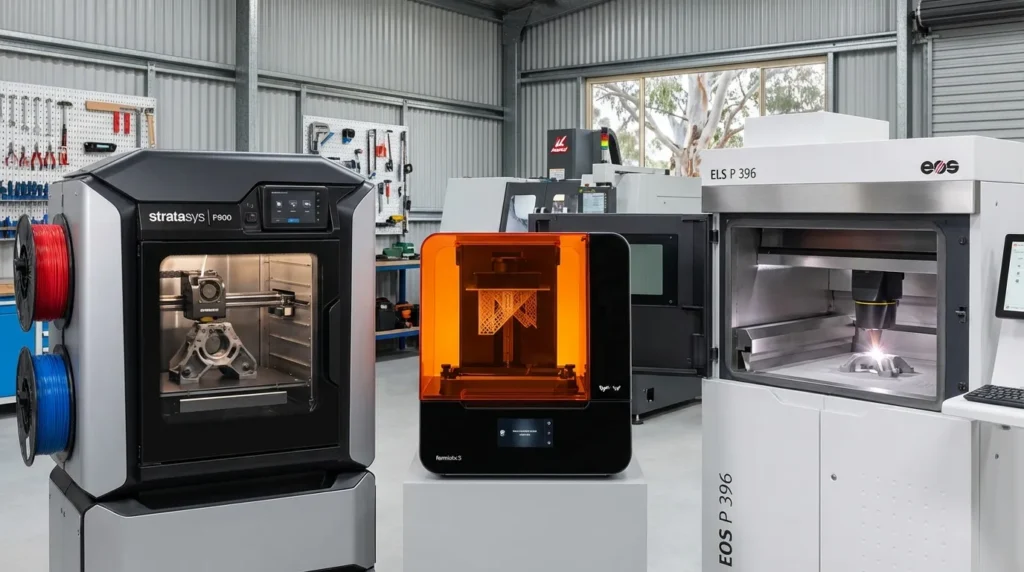
Comprehensive Comparison of 3D Printing Technologies: FDM vs SLA vs SLS
3D printing isn’t just a quirky “prototype-only” trick anymore, it’s now a serious option for making full production parts. Engineers are using it, teachers are bringing it into lessons, and hobbyists? They’re jumping in with excitement (though many spend more time fine-tuning settings than actually finishing projects). The choices are wide, FDM vs SLA vs SLS, plus mixed setups that blend features for clever and sometimes unexpected results. Each type works best in certain situations, and knowing those strengths can save headaches.
In Australia, anyone running fast, detail-focused FDM printers will see how they stack up against SLA, SLS, and newer workshop arrivals. A smart way to compare is by looking at both speed and surface quality, especially when the finished product matters as much as how it’s made. We’ll keep it simple and stick to handy tips, like picking SLA for fine details or SLS for tough prototypes, so whether you’re crafting custom tools or making small batches, you’ll know which option is worth using.
Understanding the Basics of FDM vs SLA vs SLS
FDM (Fused Deposition Modeling) works by heating a thermoplastic filament and pushing it through a nozzle, building the object one thin layer at a time. People often choose it because it’s affordable, reasonably fast, and makes durable, usable parts, great when you need something that can handle regular wear and tear. PLA is the everyday pick for items like figurines or small desk gadgets. ABS is better when heat resistance is important, such as for parts near engines or electronics. PETG sits between the two, offering more toughness plus some chemical resistance. For heavy-duty jobs, carbon-fiber-reinforced nylon delivers serious strength for demanding applications.
SLA (Stereolithography) works in a completely different way. A laser hardens liquid resin into solid layers, creating parts with very fine detail and smooth surfaces that can look like they came from a mold. This makes it a favorite for detailed prototypes, dental models, or delicate jewelry designs. Resins range from simple photopolymers to special engineering blends that bend or absorb impacts without breaking. The key is picking the right resin for the job, flexible for wearable items, rigid for precision parts, or impact-resistant for working prototypes.
SLS (Selective Laser Sintering) uses a laser to fuse powdered material, often nylon, into solid shapes. No extra supports are needed since unused powder keeps the piece stable during printing. This method is great for complex shapes and strong, functional parts. Many manufacturers skip traditional molds by using SLS, printing straight from CAD files and often cutting production times.
Here’s a quick comparison of core aspects:
| Technology | Primary Material | Strengths |
|---|---|---|
| FDM | Thermoplastics | Affordable, fast, functional parts |
| SLA | Photopolymer resin | High detail, smooth finish |
| SLS | Nylon powder | Strong, complex geometries |
Each method works best for certain needs. Your decision usually depends on project goals, budget, and whether you care most about looks, strength, or speed.
Precision and Surface Finish in FDM vs SLA vs SLS
SLA is known for its smooth, almost glass-like finish, many compare it to injection-molded parts, and often that’s a fair match. With layer heights down to 25 microns, you get parts that look polished and feel ready for display. That’s why it’s a go-to for prototypes meant to impress, like sleek gadgets or medical tools where a smooth, sealed surface isn’t just nice, it makes cleaning easier and helps keep germs away. SLS can come out fairly smooth too, though it usually has a slight powdery texture. That feel can be reduced with bead blasting, vapor smoothing, or other finishing steps, how much you refine it depends on how perfect you want it to look.
FDM’s accuracy can surprise people when it’s set up well. An industrial rig, like a RatRig V-Core with Klipper firmware, can keep layers lined up even at faster speeds. Dual extrusion adds options, letting you mix materials and use dissolvable supports so you avoid surface damage during cleanup. With good nozzles, solid linear rails, and slicer settings tuned for the job, it’s possible to reach around 50 microns, getting closer than expected to SLA detail. For more on nozzle choices, see Maximizing Your 3D Printing Potential: A Comprehensive Guide to 3D Printing Nozzles.
But precision isn’t just about looks. In tooling, tight fits mean parts connect and function properly. SLA handles fine features but can be brittle under stress. SLS offers strength with detail at about 100 microns. FDM keeps solid tolerances for mechanical uses, and often does it without breaking the bank.
Strength and Functional Performance in FDM vs SLA vs SLS
When it comes to raw mechanical strength, SLS often gets the attention. Nylon sintered parts are known for being tough, able to handle wear and tear and built for real-world use, like tools or housings that take daily knocks. With tensile strengths around 60 MPa, they stand up to repeated stress without bending out of shape. FDM can be strong too, especially when using engineering-grade filaments such as PETG for general durability, ABS for impact resistance, polycarbonate for stiffness, carbon fiber composites for light but strong builds, or specialty blends that sometimes even beat SLS in certain toughness or rigidity tests. SLA? It delivers incredible precision, but it’s often more brittle, though newer “tough” resins are closing that gap in interesting ways.
In many industrial spaces, FDM is often chosen for its speed and low cost. It’s common to see a custom jig printed overnight to keep production moving. SLS shines when complex, load-bearing parts are needed, like drone frames that survive crashes, automotive clips that withstand vibration, or couplers that handle repeated torque. SLA is great when looks matter more than pure strength, display models, scaled replicas, or detailed decorative pieces.
Materials make a big difference. FDM’s wide filament selection lets users adjust for heat resistance, flexibility, or chemical protection. SLS nylon can be mixed with additives for UV protection, flame resistance, or extra strength. SLA resins now include biocompatible and high-temp versions, making them useful for medical tools or electronics housings that need both precision and special performance.
Speed and Efficiency in FDM vs SLA vs SLS Production
How fast you can turn ideas into finished parts often guides the tech you’ll pick. FDM printers are generally quick for single pieces, and with high-speed firmware like Klipper or input shaping, smart tweaks that control vibration while keeping edges clean, you can push them even faster. Large-format machines are great for producing multiple parts in one go; you’ll see downtime almost vanish. An IDEX dual-extrusion setup can print mirrored or duplicate items side-by-side, cutting production time a lot, which can be the difference between hitting a deadline or missing it. For more details on dual extrusion benefits, see Guide to Dual Extrusion: Maximizing Your 3D Printing Potential.
SLA usually runs slower since each layer needs to cure before the next starts. But newer models are closing the gap with features like multiple lasers or LCD masking. MSLA printers can beat SLA in some cases, curing an entire layer at once with UV light through an LCD, especially handy for bigger builds where every saved minute matters. SLS is excellent for batch jobs, though preheating and cooling the powder bed is a step you just can’t rush.
For many Aussie makers, FDM offers a sensible mix, fast output without costing too much. Add a tuned enclosure, as in 3D Printer Enclosure Setup for High-Speed FDM Printing, and prints stay crisp even when local weather does its usual unpredictable thing.
Cost Considerations in FDM vs SLA vs SLS
The cost difference between various 3D printing methods can be pretty big, so it’s worth knowing what each option will actually set you back before you get started. FDM printers come in all shapes and sizes, from small, budget-friendly desktop models that sit nicely on a table, to massive industrial machines that take up serious space. Filament is usually low-cost, and you can often grab a beginner setup for under AUD $1,000. On the other hand, large automated FDM systems can easily go over AUD $15,000, and that’s before adding any extras. SLA tends to fall in the middle, though resin isn’t cheap, expect around AUD $150 or more per litre, plus the need for careful handling. SLS is at the higher end, with basic industrial powder printers starting near AUD $15,000 and some reaching over AUD $100,000.
Maintenance brings its own expenses. FDM is generally straightforward as long as you keep up with calibration and cleaning, see FDM 3D printer maintenance: Essential Practices for Reliability for useful advice. SLA adds steps like preparing resin, post-curing, and extra finishing. SLS involves careful powder management, strong ventilation setups, and regular filter swaps, which can quietly raise costs.
When you factor in consumables, spare parts, electricity, and the time spent printing, you get a clearer picture than just looking at the upfront price. FDM often works well for schools or small businesses; SLA’s higher cost pays off with ultra-precise results in areas like dental work or jewelry; SLS justifies its price with strong, complex parts made in larger volumes.
Industry Trends and Future Outlook
The 3D printing world is changing fast, and it’s exciting to see how it’s moving forward. Right now, high-speed FDM is becoming more popular, thanks to smarter firmware, better motion setups, and multi-material options that let you produce complex builds in one go instead of slogging through separate parts. SLA is focusing on quicker curing, more automation, and tougher resins that can match some engineering plastics. SLS is slowly getting closer to desktop pricing, though big industrial models still lead in aerospace and automotive projects.
In Australia, FDM’s appeal is easy to see: reliable local support, supply chains that deliver on time, and parts that arrive when promised. Companies like Raven 3D Tech don’t just sell printers, they help refine processes so production stays steady. Hybrid manufacturing is growing too, mixing FDM with CNC milling or laser cutting to hit precise tolerances and smooth finishes while keeping prototypes fast. For a broader perspective, check FDM 3D printers vs SLA vs SLS: 2025 Industrial Guide.
In the future, AI-powered slicing, predictive upkeep, and built-in quality checks should make reliability even better. Eco-friendly materials and recycling efforts are also on the rise, especially among sustainability-minded Aussie makers.
Making FDM vs SLA vs SLS Work for You
If you’re aiming for a tricky prototype, dependable tooling, or a part ready to head straight into production, FDM often ends up being the practical pick, especially when you want strength without a long wait. SLA and SLS have their own best uses, too. They vary in price, turnaround time, and durability, so it’s worth looking at those differences and seeing which fits your project. Once you know where each method works best, you can combine them in ways that stretch both your budget and your results.
Start by figuring out your top priority for the job. Do you need a smooth, polished surface to wow a client? Or toughness that can handle everyday use? Maybe speed is the big deal because the deadline is tight. Once you’ve nailed that down, picking the right method is easier. An engineering team might choose FDM for quick, functional parts, use SLA for sharp, display-ready pieces, and go with SLS when they want strong, detailed shapes without having to remove supports.
Buying good machines, and keeping them in shape, usually pays off. A dual extrusion setup, a solid enclosure, or smarter firmware can bring FDM results closer to pro-level. With SLA, using the right resin and giving it a careful post-cure often makes it tougher. In SLS, small changes in how you handle the powder can noticeably improve the finish and strength.
Think of these options as tools in the same toolbox. Sometimes you’ll switch between them during a project; other times you’ll stick with the one already doing the job perfectly. Understanding FDM vs SLA vs SLS thoroughly ensures you can make that choice with confidence.
