
Table of Contents
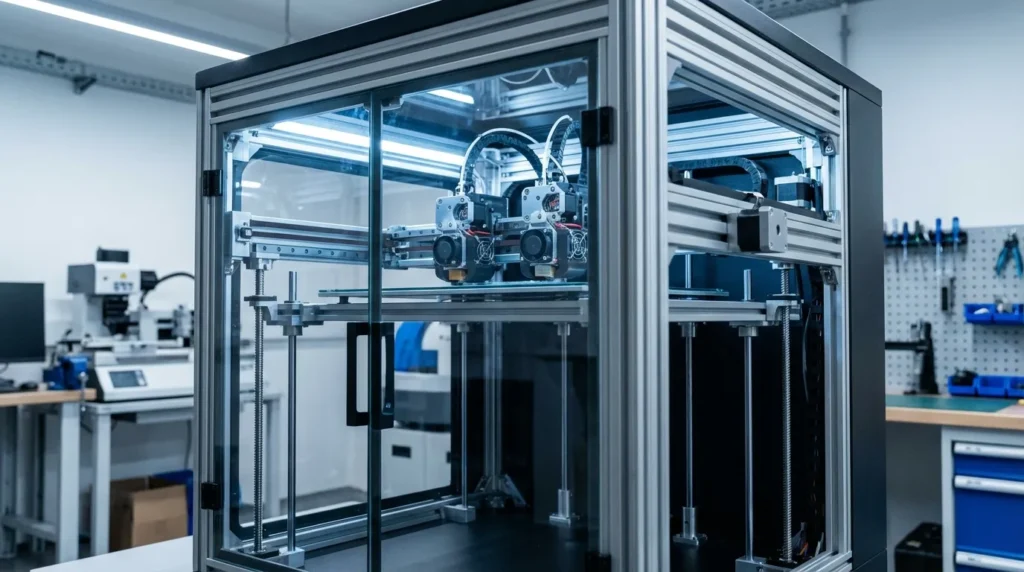
FDM 3D Printers: Essential Setup for Peak Performance
Getting strong results from FDM 3D printers usually isn’t about luck anymore, or endless trial and error (we’ve all been there). For industrial engineers and other advanced users, including educators, results often come down to a well planned 3D printer setup. Simple as that. Speed and accuracy matter a lot, especially when repeatability is needed. That repeatability usually depends on how the system is built and tuned over time, not just during the first install. In most cases, it’s an ongoing process, not a one time fix.
Across Australia, more manufacturers now use FDM for real production work, not just a prototype that gets printed once and forgotten. This shift brings tighter tolerances, longer print runs, and real pressure on uptime, especially during busy weeks. A weak component or a poor setup choice can easily cost hours, sometimes days. When small issues stack up, delays add up fast. A solid setup avoids most of that and helps turn FDM 3D printers into production tools people trust to keep running, usually without constant babysitting.
This guide focuses on the components that matter most, with no filler. It looks at motion systems and extrusion, along with thermal control, electronics, and calibration. The focus stays on practical choices that improve output and day to day reliability, not marketing hype. Whether it’s a RatRig V-Core, an IDEX system, or a custom industrial build, these ideas apply and scale well across different machines.
Why FDM 3D Printers Setup Matters in Industrial Use
FDM is now the most common 3D printing process used in industry, and that didn’t happen by accident. It’s flexible, cost effective, and much more capable than it was five years ago, especially when it comes to materials and machine reliability. Market data shows this clearly: FDM holds the largest share of the overall 3D printing market, and more businesses print parts every year. This shift isn’t theoretical, you can usually see it right on the shop floor.
| Metric | Value | Year |
|---|---|---|
| FDM market share | 36.7% | 2026 |
| Businesses using FDM | 59% | 2024 |
| Businesses increasing part output | 82% | 2023 |
Those numbers point to something very practical. FDM has moved past being mainly a prototyping tool. It’s now often used for jigs, fixtures, tooling, and even end use parts, usually alongside other production methods. In this setting, setup quality matters more than it used to. Expectations are higher, and the impact of mistakes is bigger.
Fused Deposition Modeling (FDM) holds the largest market share of 36.7% in 2026 owing to the increasing demand for rapid prototyping.
In industrial environments, poor setup often leads to failed prints, warped parts, or dimensions drifting out of spec. A solid setup usually improves uptime and helps teams trust the process during regular production runs. It also cuts down on constant operator involvement, which matters when printers are expected to run reliably, not watched all the time.
Motion Systems: The Foundation of Speed and Accuracy
At the heart of any high‑performance FDM 3D printer is the motion system. It controls how fast the toolhead moves and how closely it follows the toolpath, which is usually where real performance is gained or lost. In industrial machines, core XY layouts paired with linear rails are a setup many builders rely on, and for good reason. It’s a well‑proven approach.
Linear rails help reduce flex and soak up vibration that often shows up during fast moves. With a core XY design, the motors stay fixed to the frame, so less mass is moving around while the printer runs. That usually makes a clear difference. Together, these choices make it easier to push acceleration higher while still keeping accuracy on the print surface, where it counts. In many modern systems, speed increases of around 25 to 40 percent are common while still holding tight tolerances, which matters a lot in production work.
Input shaping and firmware‑level motion tuning are just as important. With platforms like Klipper, vibration is measured and corrected in software instead of guessed. Corners tend to look cleaner, and surface finish often improves even when running faster. The benefits add up fast.
Problems show up when low‑quality belts are paired with very stiff frames, or when acceleration is increased without proper tuning. Speed without control usually leads to ringing and layer shifts.
For Australian manufacturers running long print jobs, a stable motion system often means less rework and less scrap. Simple as that.
Extrusion Systems: Consistent Flow Equals Consistent Parts
Extrusion is where material quality meets mechanical control, and that’s often where results either stay steady or slowly slip, you’ve probably seen both. Uneven flow usually shows up as weak layer bonding, rough surfaces, or parts drifting out of spec over time. That’s frustrating when the same job runs every day. For industrial FDM work, direct drive extruders with hardened components are a solid choice, especially for long production cycles. From my experience, that dependability shows up most during long, unattended runs, when small problems have time to show themselves.
Are hardened nozzles almost required once abrasive filaments are involved? Carbon fibre nylon, for example, wears through softer metals fast, which isn’t surprising. High‑flow hotends can help by allowing larger layer heights and faster speeds without the usual under‑extrusion problems. Dual gear extruders help too, since stronger filament grip cuts down on slip during long prints. Each upgrade is small on its own, but together they usually make a real difference.
IDEX systems add flexibility to industrial setups, allowing multi‑material prints, soluble supports, and mirrored production runs. Calibration matters more here, though. Both toolheads need to stay aligned across the full motion system, or parts can come out mismatched, an expensive lesson many shops learn the hard way.
Thermal Management: Heat Control for Reliable Output
With materials like ABS and nylon, temperature control often decides whether a print finishes cleanly or fails halfway through, especially on larger jobs. Heat control is easy to overlook (which makes sense), but in industrial printing it often causes many common issues. Many filaments need steady temperatures so parts don’t warp or split between layers. For serious work, an enclosed build chamber is usually a basic need, especially on long prints. It’s a simple setup, and you notice the difference pretty quickly.
Active chambers keep heat even across large parts. That consistency usually improves layer bonding and results in a smoother surface, with less rippling and fewer surprises. On big prints, this really matters.
Bed heaters also need enough power and even heat. When heating isn’t even, first layers struggle and parts can lift (you’ve probably seen this). Insulation under the bed helps with efficiency and stability. No shortcuts here, in my view.
The printers save us time while maintaining precise dimensions.
In Australian workshops, where ambient temperatures can change a lot, controlled thermal environments protect print quality and make day-to-day work less frustrating, especially on long, high-value runs.
Electronics, Firmware, and Automation in FDM 3D Printers
In busy shops and labs, automation is often what keeps prints coming out the same way every time. That kind of consistency matters most when several machines or people are involved. Bed leveling and flow calibration cut down on manual tweaks, while filament runout detection can save hours by catching problems early, especially in printer farms or classrooms where surprises cause real headaches.
Behind that reliability, modern industrial FDM 3D printers depend a lot on electronics and software. There’s no real way around it now. Good stepper drivers keep motion smooth and machines quieter, which operators notice right away. Power supplies matter too, often more than people expect, because they protect parts during long runs when failures get costly and frustrating.
Firmware like Klipper is now very common. By moving computing work away from motion control, it allows faster responses and flexible features. That’s why remote monitoring, automated calibration, and print queue management are part of daily work. Industry analysts say regulated fields like aerospace and defence are driving demand for traceable, repeatable output, which isn’t surprising.
Calibration and Maintenance: How Hardware Becomes Performance
Small calibration habits often decide if good hardware stays reliable, since even solid machines can drift more than you might think. For industrial users, calibration works best as a routine task, not a one‑time step forgotten after setup. Bed levelling and extrusion tuning belong here and should be done regularly to keep results steady, usually week to week. In my view, this simple pattern often means fewer print surprises.
Over time, a clear calibration schedule saves hours and cuts avoidable downtime, which can pile up fast. It also stops small problems from turning into overnight failed builds that waste material. Maintenance tasks like belt tension checks and rail cleaning should be planned, tracked, and logged, even with a simple checklist.
I expect the 3D printing industry to see moderate growth heading into 2026, driven primarily by rising adoption in defense and aerospace applications.
Putting It All Into Practice
For industrial engineers and advanced users, the benefits usually show up pretty fast: quicker prints, better accuracy, and fewer failed jobs, which matters a lot during regular production runs. FDM 3D printers can compete with other manufacturing methods in many cases, but that usually happens only when the machine is set up correctly and checked regularly over time.
Optimising a 3D printer setup isn’t about chasing every new feature. More often, it’s about building a balanced system that works reliably day to day, without constant headaches. Motion, extrusion, thermal control, electronics, and calibration all need attention, even though one area will usually matter more depending on how the printer is used.
So where should you start? A practical approach is to look at the weakest area first, since it often becomes clear once you slow down and take a close look. Rushing upgrades or piling on random parts rarely helps. Upgrade with a clear goal, tune carefully, and keep notes on what changes after each adjustment. Over time, the printer usually moves from being a constant repair project to a dependable production tool.
