
Table of Contents
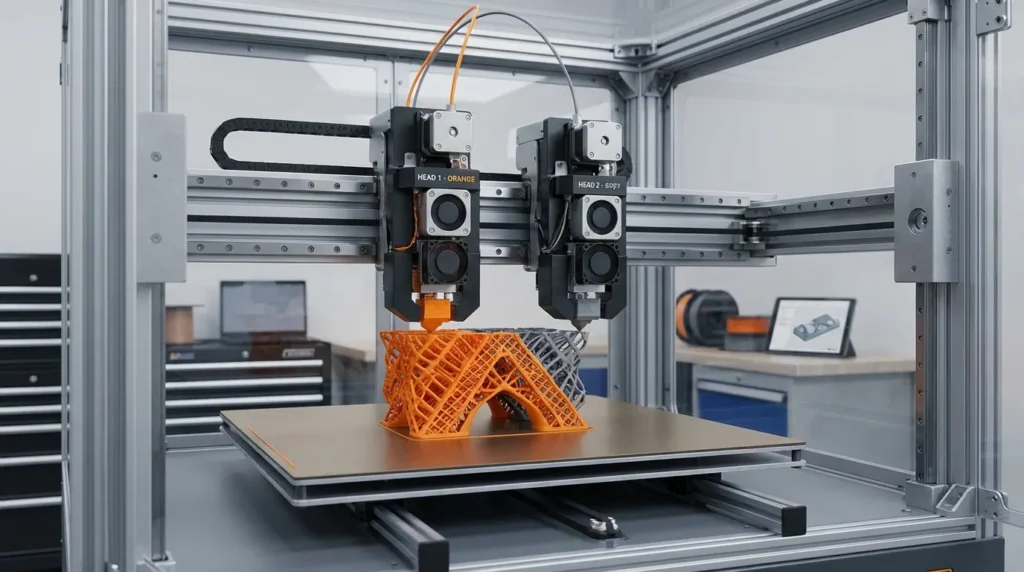
Dual Extrusion Printing Techniques for Superior Results
Dual extrusion has moved from a niche idea to a standard feature in modern FDM systems, and you can usually see that change on the shop floor. For engineers and manufacturers, it deals with the everyday, time‑draining issues that slow work down. Complex parts can be printed in one run, materials can be combined for strength and flexibility, and surface finishes often come out cleaner, which matters more than many people think. Manual post‑processing also drops away, and that saved time is often bigger than it first seems (a real win).
In Australia, where high‑mix, low‑volume production is common, these gains often count even more. Tooling, jigs, fixtures, and functional prototypes usually need to work straight off the printer, without extra tinkering. Multi‑material printing helps when lead times are tight and skilled labour is limited, which is often the reality. The result is less waiting around and steadier progress.
This guide explains dual extrusion in clear, simple terms, so it’s easy to follow. It looks at how the systems work, the main types, and which material combinations tend to work well together. There’s a strong real‑world focus, with industrial use cases, common mistakes, and a look at where the technology is heading, from my point of view. Nothing overdone, just what’s needed.
What Dual Extrusion Really Means in Modern FDM Printing
Dual extrusion means a 3D printer can place two different filaments in a single print. This could be two build materials, or more commonly a build material paired with a dedicated support. The idea is simple, but the results are often more noticeable. With better control over where each material goes, designers can adjust strength and flexibility, improve surface finish, and deal with internal features with fewer tricks. In everyday use, this usually means function is designed directly into the part instead of added afterward. That often leads to less cleanup and, at least in my experience, fewer trade-offs overall.
In industrial settings, the most common setup combines a strong part material with soluble supports. This makes complex shapes more realistic to print, including smooth internal channels that are hard to produce in other ways, especially when they’re deep or fully enclosed. Market data also shows the multi-material segment growing fast as manufacturers move beyond basic prototypes. These parts are expected to handle real loads, higher temperatures, and chemical exposure, so performance tends to matter from day one rather than later on.
| Metric | Value | Year |
|---|---|---|
| Global 3D printing market size | USD 34.45 billion | 2026 |
| Multi-material 3D printer market | USD 716.58 million | 2026 |
| Professional FDM shipment growth | +18.4% YoY | 2025, 2026 |
Taken together, these numbers show a clear change. Dual extrusion is no longer seen as a novelty. It’s often about speed, repeatability, and making parts that can go straight to the shop floor. As quality standards rise, single-material workflows often fall behind, especially at scale where small flaws add up quickly.
Today, dual extrusion is usually done in two main ways. Shared-nozzle systems feed two filaments into one hotend, which keeps the hardware compact but requires careful tuning and patience. Other printers use separate or swappable toolheads, like IDEX or full tool-changing setups. These offer more options, but they cost more and add complexity, which usually affects maintenance and daily use.
Comparing Dual Extrusion System Types and Their Strengths
Not all dual extrusion systems behave the same, and the differences usually show up after a few prints go wrong. Knowing how each setup works can reduce wasted material and setup frustration, which matters when machines are running job after job. The choice affects reliability, how much hands‑on work operators need to do, cost per part, and how much time goes into daily prep. Over a full production week, those small details add up fast.
Shared‑nozzle dual extrusion is the most basic option. Two filaments feed through a single nozzle, which keeps the toolhead lighter and the upfront cost lower, something that looks attractive at first. In real use, this setup often creates purge waste and occasional color bleed. For industrial users, print consistency can drop, especially when switching between very different materials several times a day. It can work, but it’s usually a trade‑off rather than the best choice.
IDEX systems use two independent carriages, and that changes how jobs are handled. Each nozzle parks when not in use, which often cuts down on oozing and material mixing. That small change makes a clear difference. Mirror and duplication modes also help produce small parts faster. This is why many high‑speed industrial FDM platforms choose IDEX for short‑run work, where speed often matters most.
| System Type | Key Benefit | Main Limitation |
|---|---|---|
| Shared nozzle | Lower cost | Material contamination |
| IDEX | Clean material switching | Higher mechanical complexity |
| Tool changer | Minimal purge waste | Higher upfront cost |
Tool‑changing systems are appearing more often in production environments. By cutting back on purge towers and letting each material run at its own temperature, they give operators more control. This is especially useful for engineering polymers, where tight tolerances and surface quality don’t leave room for shortcuts.
In day‑to‑day use, many Australian industrial users lean toward IDEX systems. They offer a good balance of speed and cleaner prints while staying reliable during long runs. When paired with firmware like Klipper, they support accurate motion control, automated calibration, and quicker job changes. From practical experience, those benefits make a real difference in everyday production.
Materials That Work Best Together in Multi-Material Printing
Common Material Pairings for Dual Extrusion
Material pairing is where dual extrusion really starts to get interesting, at least in my experience. Once you’re past the basics, this is usually the part people enjoy most. At the same time, picking the wrong mix can cause weak bonding or supports that break halfway through a print, which hurts even more after hours of machine time.
A very common setup combines PLA or PETG with PVA supports. Market research shows PVA makes up about 70% of soluble support use in dual extrusion, and that lines up with what many users see day to day. Since it dissolves in water and leaves clean surfaces, it’s often used for visual models, prototypes, and light‑duty fixtures where surface quality matters for presentation or fit checks. Smoother finishes usually mean less scraping and cleanup later.
High-Temperature and Soluble Support Combinations
For higher‑temperature printing, BVOH is often paired with nylon or reinforced filaments. It dissolves faster than PVA and generally handles heat better. This combo works well for tooling and functional parts printed in warm chambers or during long, demanding print jobs, the kind you really don’t want failing overnight.
Many issues come from poor moisture control or mixing materials with temperature ranges that don’t work well together. Soluble supports absorb water quickly, sometimes in just a few hours. Bad storage can make filament brittle and cause late‑stage failures, which is about as frustrating as it gets. Dry boxes and controlled storage help keep materials stable and results more predictable. It takes extra effort, but it’s usually worth it.
In industrial workflows, teams often stick to a small set of proven material pairings. This tends to improve repeatability, cut down setup time, and make training and inventory easier over time, fewer surprises, fewer variables, and steadier results.
Real Industrial Use Cases and Lessons Learned
On busy shop floors, dual extrusion has become part of day‑to‑day production support. Jigs and fixtures often combine a rigid body with softer contact points, which is a common and practical setup. The idea is straightforward, and it usually pays off by protecting finished parts during assembly and making jobs less tiring for operators. Fewer scratches and easier handling tend to appear quickly once these tools are in use.
A typical setup uses a carbon‑fibre reinforced nylon jig with soluble supports. This creates a strong, heat‑resistant tool that comes off the printer ready to use, without sanding or drilling, which most teams appreciate. Compared with traditional machining, this approach can save days. It also makes mid‑project design changes much easier to manage, which helps when requirements change more than expected. That flexibility is often the real benefit.
Dual extrusion is also used for moulds in composite layups. Internal channels and smooth surfaces that are hard to machine by hand become realistic options. Soluble supports allow quick, clean removal, usually without chisels or prying, which helps protect the mould’s shape.
One clear lesson across these examples is calibration. Misaligned nozzles can cause layer shifts, and incorrect offsets weaken material bonds. In production environments, regular calibration and careful thermal control are simply required.
Australian manufacturers also report lower labour demands. When parts come straight off the printer ready to use, teams can focus more on design and process improvements instead of cleanup and rework. This often frees up time to refine fixtures or improve throughput, where it matters most.
Advanced Considerations for Speed, Precision, Reliability, and Stability
As print speeds go up, dual extrusion systems usually need to be very solid to keep pace. High acceleration can reveal small problems fast, sometimes earlier than expected. Rigid frames and well‑tuned motion systems really matter here, especially when toolheads are swapped several times in a single job, which happens more often than many people think. In these situations, there’s very little room for flex or slow movement drift.
Closed chambers are often one of the first things people notice. By keeping temperatures steady, they help a lot when working with engineering plastics. Without stable heat control, parts can warp or crack along layer lines. Consistent temperatures usually mean stronger layer bonding, more accurate dimensions, and fewer surprises when the part is removed from the bed.
Firmware also matters. Better motion planning, combined with pressure control, helps keep extrusion smooth. During mid‑print material changes, pressure shifts can lead to thin areas or surface flaws. Small adjustments can make a noticeable difference.
Across the industry, systems are getting smarter. Tool‑changing machines and AI‑based tuning are moving from testing into regular use. For Australian users focused on short‑run production, reliability is often the top concern, since every print matters and reprints are hard to justify.
Putting Dual Extrusion Into Practice
The best results usually start with a clear goal. When planning for dual extrusion, it helps to decide early if the focus is on soluble supports or on mixing material properties. It also helps to be realistic about speed, which often matters less than people expect. With this kind of clarity, teams can choose the right system more easily and avoid paying for extras, such as additional toolheads that might otherwise sit unused.
You’ll quickly see that spending real time on material testing is worth it. A helpful approach is to start with small calibration prints before moving on to full builds, while keeping notes on both what works and what doesn’t, even the boring parts. These small wins add up, especially when settings are shared so knowledge doesn’t stay stuck in one operator’s head.
Flexibility matters as needs change. Industrial 3D printing moves fast, so platforms that allow upgrades and integration tend to age better.
In my view, when used with purpose, dual extrusion can clean up overhangs, combine materials, and smooth workflow handoffs in everyday production.
