
Table of Contents
Hybrid Manufacturing in 3D Printing: Integrating Additive and Subtractive Processes
Hybrid manufacturing is changing how engineers and makers create parts. By mixing additive 3D printing with subtractive CNC machining, teams can often produce components faster, meet tighter measurements, and skip multiple separate steps. This is something most workshops appreciate. Across Australia, industrial engineers, manufacturing crews, technical trainers, and more are finding that hybrid 3D printing often results in cleaner prototypes, easier tooling setups, and reliable production parts ready for immediate use.
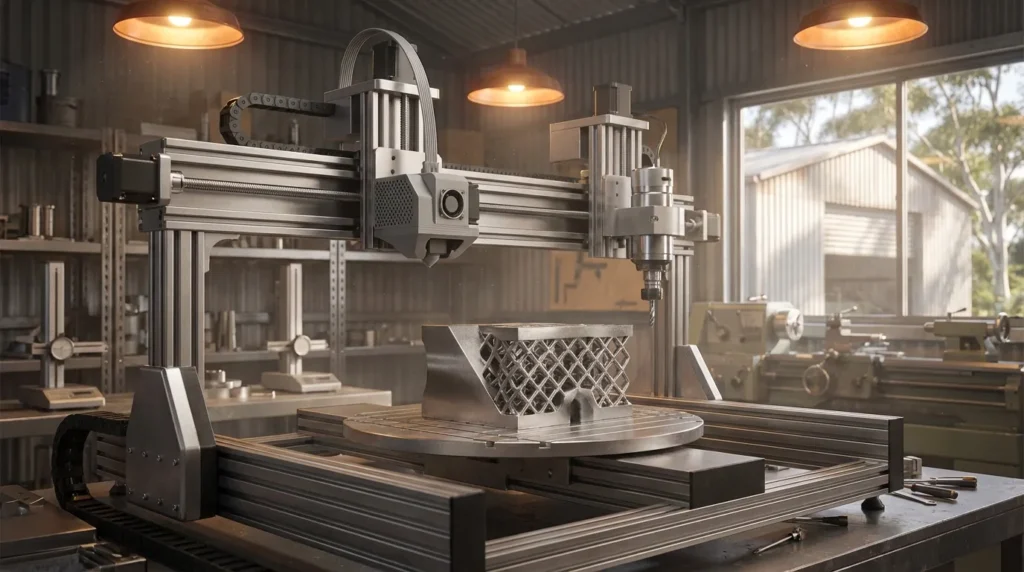
Picture printing a tricky curved shape with FDM tech. Then, on the same setup, switching to CNC milling to perfect every surface. No swapping machines, no wasted time. That’s hybrid manufacturing, where speed and accuracy work side by side in one smooth process.
Understanding Hybrid 3D Printing
Hybrid 3D printing combines two manufacturing methods: additive manufacturing, where parts are built layer by layer, and subtractive manufacturing, where extra material is removed to get exact measurements and smooth surfaces. On a busy factory floor, this often means much less time spent on boring finishing tasks. Few people enjoy hours of sanding. It also means fewer production delays. Because both methods run on the same machine, teams can go from shaping detailed forms to perfecting small features without having to reattach the part. That saves a lot of time and usually avoids the annoying alignment problems that happen when moving pieces between different machines.
A 2025 3D Printing Industry survey found that 43% of large manufacturers already use hybrid additive, subtractive systems. Aerospace, automotive, tooling, and medical device makers are leading the way, driven by the need to produce parts with complex internal channels and extremely precise measurements. In aerospace, fuel injector parts are a prime example. They need twisting internal passages alongside surfaces that must be flawlessly smooth. Hybrid systems can handle both in one process, skipping the hassle of moving parts between machines.
| Metric | Value | Year |
|---|---|---|
| Global hybrid manufacturing market | $1.4B | 2027 |
| Annual growth rate | 21.2% | 2025 |
| Finishing time reduction | Up to 60% | 2025 |
The table shows the trend. This technology is growing fast. By cutting finishing times, hybrid 3D printing can change production timelines and help manufacturers meet tough deadlines for complex, high-performance parts.
By combining additive and subtractive processes in a single platform, manufacturers can create geometrically complex parts while ensuring critical surface finishes are achieved without secondary operations.
How the Hybrid 3D Printing Process Works
In a hybrid 3D printing workflow, the additive stage builds parts already close to their final form. Imagine shapes that just need a bit of fine-tuning. After that, subtractive tools like milling heads and turning spindles step in, refining details and locking in tight tolerances for edges, holes, and fits. The switch from printing to machining often runs automatically. This helps cut down on mistakes without constant oversight. Some setups go even further with ultra-precise workholding that keeps each part steady until the job’s finished. Accuracy can be just a few microns, which is impressive even by manufacturing standards.
Here’s the usual sequence, though it can vary:
- CAD Model Preparation. A design mixes additive and subtractive toolpaths, often made in CAM software that can run full simulations. This makes it easier to spot issues before production starts.
- Additive Build Phase. Methods like FDM, SLS, or metal powder bed fusion form the main geometry, leaving a thin layer of extra material for later machining.
- Tool Changeover. Sometimes the machine’s programmable changer swaps tools automatically. Other times a manual swap is done for special cutters.
- Precision Finishing. CNC milling or turning smooths and sizes surfaces. Grinding can be added for super-fine finishes or exact fits, such as bearing seats.
Fast FDM systems like the RatRig V-Core with Klipper firmware can produce prototypes quickly without losing accuracy. In metal additive work, machining heat-sensitive alloys right after printing often prevents warping. This keeps both strength and natural texture, a step many agree is worth doing.
Real-World Hybrid 3D Printing Applications
Hybrid 3D printing isn’t some far-off tech hidden in aerospace labs. It’s already proving useful in tough, real-world situations. In Australia’s mining industry, for example, equipment makers use it directly on-site to make tough, wear-resistant parts right where the machines are. This often happens in remote, hard-to-reach places. It means avoiding long waits for overseas deliveries and cutting downtime when a key machine breaks hundreds of kilometers from the nearest town. The process usually starts by printing near-net shapes from abrasion-resistant steel, then machining only the high-wear areas for a precise fit. The outcome? Parts that often last longer than standard replacements and shrink lead times from months to just a couple of weeks.
It’s catching on in other industries too:
- Injection Molding Tooling, with printed cooling channels that boost efficiency and machined mold faces for exact tolerances.
- Medical Devices, making titanium implants with smooth finishes that may help recovery.
- Automotive, building lightweight lattice-core frames, then refining contact points for easy assembly.
- Defense, producing strong brackets and housings with built-in cable paths for added durability.
Dr. Liang Cheng notes in the Journal of Manufacturing Processes that hybrid AM combines fast prototyping with full-scale production, allowing complex internal designs and exact tolerances in one process.
Benefits of Hybrid 3D Printing for Australian Manufacturers
Hybrid 3D printing isn’t just a fancy buzzword. It comes with real, hands-on benefits that Aussie makers can start using right away:
- Speed. Production times often drop because there’s far less sanding, polishing, or re-handling compared to old-school methods.
- Precision. Parts can come out of the machine already meeting tight tolerances, so fixing them later is rare.
- Material Efficiency. By machining only the spots that truly need it, you save raw materials, cut down on scrap, and often lower costs.
- Multi-Material Capability. You can build assemblies that combine metals, polymers, and composites in one go, avoiding multiple production runs.
This approach matches Australia’s push for stronger local manufacturing. Whether it’s defense gear or mining tools, hybrid systems help companies make parts right here. This avoids long waits for imports. In remote WA, crews can print or repair components on-site. This is essential when a breakdown happens mid-shift, keeping gear running and downtime short.
If you already use quick FDM printers, adding a subtractive step can boost results from “good enough” to true production quality. For metal additive jobs, hybrid 3D printing can smooth out rough surfaces without hours of extra finishing.
Common Pitfalls to Avoid in Hybrid 3D Printing
Hybrid manufacturing can open up great possibilities, but it’s rarely smooth sailing. Some issues are obvious. Others creep in and only become clear once they’ve already caused trouble.
- Programming Complexity. Coordinating additive and subtractive toolpaths isn’t just a quick “press and play.” Good CAM software helps. Careful planning and steady oversight usually stop expensive machine problems.
- Machine Cost. The starting price can be high. Whether it’s worth it often depends on how much you produce, how tricky your parts are, and keeping the machine running. When it’s idle, it’s not earning back that investment.
- Training and Maintenance. Operators need to know both additive and subtractive processes well. Regular upkeep keeps performance smooth instead of breaking down.
- Environmental Controls. Changes in temperature or humidity can cause small printing errors or throw off machining tolerances.
Without the right training, expect poor toolpaths, wasted material, and slow production. More schools now teach hybrid workflows, so new engineers are ready to jump in. Planning multi-material builds? Exploring Dual Extrusion 3D Printer: Benefits, Challenges & Tips might spark composite ideas that work well with subtractive finishing.
Advanced Trends in Hybrid 3D Printing
Hybrid additive manufacturing has been buzzing with new developments lately, and the pace of change is hard to miss.
- AI-Driven Toolpath Optimization fine-tunes cutting paths in real time using sensor feedback. This often saves minutes per cycle while producing smoother finishes. It’s almost like a machine that learns your style as it works.
- Predictive Maintenance uses machine learning to spot wear long before it causes trouble. This often means machines last longer and there are fewer costly breakdowns.
- Multi-Axis Robotic Integration avoids the limits of old gantry setups. This makes it possible to create very large parts, such as an aircraft fuselage or ship hull, and gives more freedom to handle unusual shapes.
- Sustainable Practices include reusing leftover powders, testing biodegradable polymers, and machining methods that often cut energy use without hurting performance.
Across Australia, research teams and industry partners are building systems that use locally sourced materials. This helps reduce environmental impact and steady supply chains. With IoT sensors tracking every step, teams can see live data anywhere, adjust settings mid-run, and stop small issues from turning into full stoppages.
Implementation Guide for Hybrid 3D Printing in Industry
Thinking about bringing hybrid 3D printing into your workflow? Start with the steps that will save you headaches and deliver the biggest benefits.
- Assess Needs. Take a close look at which parts require both complex shapes and highly accurate surfaces. These are often the ones raising costs or showing up again and again in production runs.
- Pick a Suitable System. Choose equipment that works with your actual materials, part sizes, production speed, and finish goals. Metal AM is great for tough, high-strength parts. Polymer AM often suits lighter prototypes. Some systems mix both for more options.
- Get the Team Ready. Make sure operators understand the hybrid process, from CAD/CAM setup to machine use and upkeep. Skipping training here can lead to delays and extra work.
- Fine-Tune Toolpaths. Smart software planning cuts tool changes, reduces downtime, and makes switching between additive and subtractive steps smoother.
Using FDM equipment? Check out calibration tips here: Essential Guide to 3D Printer Calibration: Techniques for Precision and Performance. Consider whether more power capacity or better cooling will help keep your combined setup running smoothly.
Building Your Success with Hybrid 3D Printing
Hybrid manufacturing combines the design freedom of additive methods with the precise finishing of subtractive techniques. In Australia, this mix often means faster turnaround times, less material waste, and parts that meet strict aerospace-grade tolerances instead of settling for “close enough.” It also cuts down on dependence on overseas suppliers, which is proving more valuable than ever. Picture producing complex, highly accurate components in one smooth process. This is especially handy in industries where speed can make or break a project.
From creating detailed aerospace assemblies to manufacturing tough mining gear, hybrid 3D printing setups often give businesses a strong advantage. A smart way forward is to set clear production goals and choose technology that fits those needs, rather than chasing every new gadget. Training your team is important too, so both methods run without hiccups. Starting with a small trial job can show how well everything works together before going bigger.
Which parts of your process could benefit most? Pinpoint those, then team up with suppliers experienced in both additive and subtractive techniques. Across Australia, this approach is already delivering quicker builds, better designs, and stronger local manufacturing.
