
Table of Contents
Maximizing Your 3D Printing Potential: A Comprehensive Guide to 3D Printing Nozzles
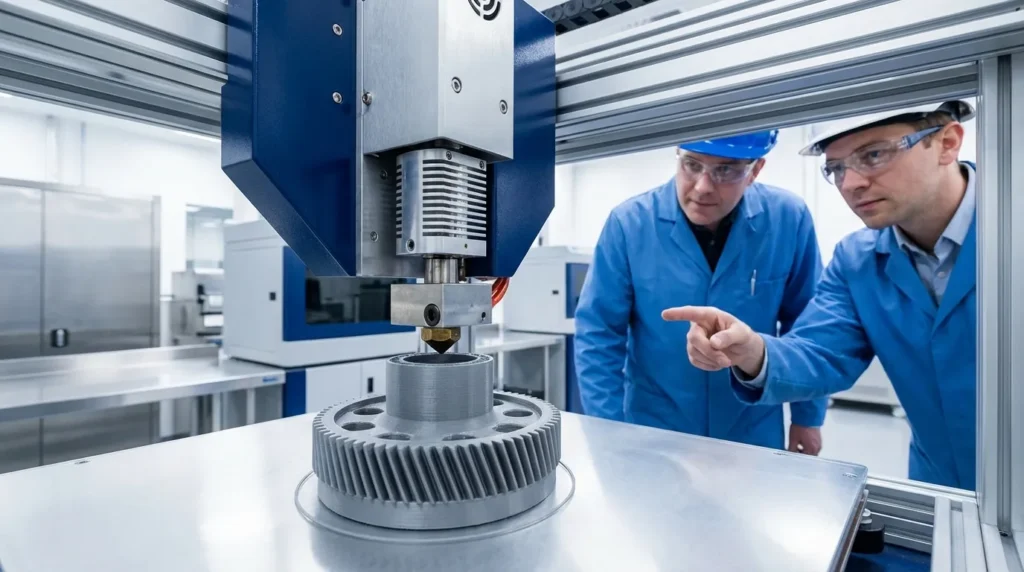
When pushing a 3D printer hard, the role of 3D printing nozzles often gets ignored. People usually focus on filament choice and tweaking settings instead. However, for engineers, manufacturers, educators, and dedicated hobbyists across Australia, choosing the right 3D printing nozzles can mean the difference between a slow, average job and a quick, accurate, reliable print. They control how the filament flows, change print speed, affect fine detail, and can even influence overall production costs.
Here, we look at the core details: nozzle types, materials, sizes, upkeep, and picking one that fits your specific project. Whether you’re prototyping for aerospace, making tools for mining equipment, producing short custom runs, or teaching students about advanced manufacturing, the tips here come from real-world experience. The aim is to help your FDM prints consistently reach that perfect balance of quality and efficiency.
More consumers are designing for processes like SLS or FDM for end products and they have customer acceptance, which is huge.
Understanding 3D Printing Nozzles Materials and Their Impact
The material a nozzle is made from can affect its overall performance, how long it lasts, how it handles high temperatures, and how well it stands up to wear. In busy industrial work, picking the right one can mean more uptime, cleaner prints, and parts that meet specs without constant fixes. It’s surprising how such a small choice can quietly save hours of frustration later.
Brass nozzles are the familiar everyday option. They heat up fast, keeping extrusion steady and predictable, which makes them great for non-abrasive filaments like PLA, ABS, PETG, and similar mixes. They’re ideal for consistent production runs. But when abrasive composites come into play, brass wears out quickly, sometimes in just weeks. Picture making hundreds of carbon fiber PLA parts, then noticing measurements drifting because the tip has worn down. For standard prints, brass works fine; for tougher materials, it’s a short-term solution.
Hardened steel nozzles take longer to heat (you may need to adjust your temperature settings), but they handle abrasive filaments like carbon fiber, glass-filled nylon, or metal-infused PLA without much trouble. They often last several times longer than brass under tough conditions, which makes them a go-to for demanding jobs, like prototypes for heavy equipment, where nozzle wear could bring production to a halt. They’re not flashy, but they’re made to last.
Ruby-tipped nozzles combine the fast heating of brass with the toughness of hardened steel. They’re built for long runs with aggressive filaments, and a single ruby tip can log thousands of printing hours with little to no wear, even with tungsten-filled materials. That means fewer changes, less downtime, and more actual printing, always a win in production.
| Material | Thermal Conductivity | Wear Resistance |
|---|---|---|
| Brass | High | Low |
| Hardened Steel | Medium | High |
| Ruby-Tipped | High | Very High |
There’s no single nozzle for every job. Matching the nozzle to your filament and project is the real key. Many industrial teams keep different 3D printing nozzles ready, swapping them as materials change, a simple habit that keeps work moving smoothly.
Choosing the Right 3D Printing Nozzles Size for Your Application
Nozzle size can change your print in more ways than most people expect, speed, detail, and even how the finished part feels in your hand. If you go smaller, like 0.2 mm or 0.4 mm, you’ll often get sharp edges and smooth surfaces, almost like the part’s been finely polished. The trade-off is that printing takes longer. Jump to 0.8 mm or 1.2 mm and you’ll push out a lot more filament quickly, cutting hours off a job, but you’ll lose some of that fine detail.
Think about what you’re making before picking a size. Small, detailed parts, such as aerospace test pieces or medical device components, usually call for fine 3D printing nozzles. In those cases, every curve and angle matters, and even a 0.1 mm difference can mess up the fit. Imagine a surgical guide that’s slightly off or a wing tip that slows instead of gliding; that can be an expensive mistake. But if you’re producing large fixtures or tough tools, a wide 1.0 mm nozzle might mean finishing before the end of your shift instead of staying late to watch a print.
Peter Zelinski points out in Wikipedia’s additive manufacturing section that nozzle choice can make the difference between going from idea to finished part without delays. Data from 3D Hubs backs this up, they found about a 60% speed increase when switching from a 0.4 mm to a 0.8 mm nozzle for certain designs.
IDEX dual extrusion adds even more options. One extruder can use a fine nozzle for the details that matter, while the other lays down infill fast. Picture a mining drill casing: a 0.4 mm nozzle for the strong, precise outer shell and a 1.0 mm nozzle inside for solid supports. You get faster results without losing accuracy.
Want to fine-tune dual extrusion for your own projects? Check out our Dual Extrusion 3D Printer: Benefits, Challenges & Tips guide for practical advice.
Maintenance Practices to Extend 3D Printing Nozzles Life
Even the toughest 3D printing nozzles still benefit from some regular care. Ignore them for too long and you might end up dealing with clogs, uneven extrusion, or downtime that can quickly drain an industrial shop’s budget.
Cold-pulling is a go-to method for many seasoned printers. It’s straightforward but works well: heat the nozzle, feed in cleaning filament, let it cool a bit, then pull it out to remove stuck debris. This trick is especially useful for clearing leftover PLA or PETG. If you’re using hardened steel nozzles with composite filaments, it’s smart to have a proper cleaning kit, as residue from those materials can harden like cement and completely block the nozzle.
Wear and tear isn’t always obvious. A widened tip, tiny pits, or strange extrusion patterns can be early signs of trouble. Many high-volume shops check 3D printing nozzles about every 100 print hours and swap them before problems start. Keeping track of print time and which filaments you’ve run helps plan cleanings or replacements, avoiding last-minute breakdowns.
| Nozzle Type | Average Lifespan with Abrasive Filament | Average Lifespan with Non-Abrasive |
|---|---|---|
| Brass | 1, 2 weeks | 3, 6 months |
| Hardened Steel | 3, 5 months | 1+ years |
| Ruby-Tipped | 1+ years | 2+ years |
Preventative care is usually far cheaper than emergency repairs. Including nozzle inspections in your regular 3D printer calibration routine keeps prints cleaner and makes sure parts fit together as they should on the production line.
Advanced 3D Printing Nozzles Technologies and Trends
Industrial 3D printing is moving so fast that nozzle improvements sometimes feel like they’re constantly trying to catch up.
High-flow 3D printing nozzles, with larger internal channels, can push much more filament without making the tip bigger. This often means faster output and smoother surfaces, especially on tricky, fiber-filled materials that can slow down regular setups. For certain tough prints, they can be the difference between finishing a part and dealing with a failed job.
A smart idea that’s becoming popular is the quick-change hotend. These make swapping nozzles take just minutes, with no special tools needed. Less downtime means fewer slow points in production, and in a busy shop, those saved minutes can decide whether you meet a shipping deadline or end up staying late to fix issues. Switching from a fine-detail prototype to a large production run is far easier.
Coated nozzles, nickel-plated, tungsten-carbide, or new blends, are showing their value too. They usually resist buildup and last longer, cutting cleaning time by around 40%. That’s a big relief for anyone who’s spent hours scraping off residue. Now, AI-based path tweaks are also helping reduce wear, keeping prints looking consistent over longer runs.
In Australia’s mining and aerospace fields, hardened steel and ruby-tipped nozzles are still the go-to for composite-heavy work. Lately, some makers have started testing hybrids that mix materials for better heat transfer and strength, a change that could be the next big step in FDM nozzle design.
Balancing Speed, Precision, and Cost
For many makers, figuring out the right mix of speed, accuracy, cost, and even how much cleanup is needed afterward can feel like chasing a moving target. It’s easy for the process to get a little frustrating.
Smaller nozzles usually mean longer print times, and they can add extra finishing steps, like filing, sanding, or polishing, if you want a smooth finish. A quick way to boost speed is to switch to a bigger nozzle, which can cut print time dramatically, sometimes by nearly half. The catch? The surface often comes out rougher, so you might spend more time sanding or even machining. For example, printing a large tooling fixture with a chunky 1.2 mm nozzle can be lightning-fast, but you might lose hours getting it to meet strict measurements.
Complex shapes or composite builds can raise post-processing costs by 30, 60%. A 0.6 mm nozzle often strikes a good balance, decent speed, solid detail, and cleanup that’s manageable.
| Nozzle Diameter | Relative Speed | Relative Detail |
|---|---|---|
| 0.2 mm | Slow | Very High |
| 0.4 mm | Moderate | High |
| 0.8 mm | Fast | Moderate |
| 1.2 mm | Very Fast | Low |
When fine detail matters most, slowing down is worth it. But for tough prototypes or shop jigs, speed and cost usually win out, especially on tight deadlines.
Making 3D Printing Nozzles Work for You
Getting a 3D printer dialed in often starts with the nozzle, it’s the small part that quietly does most of the work. The filament you choose can make or break a job: PLA is great for fast prototypes, while PETG comes in handy when you need extra strength. Pick a 3D printing nozzles diameter that matches the level of detail your design calls for, and keep it clean. A clog halfway through a print will stop everything in its tracks.
New 3D printing nozzles designs can really improve results, faster printing, smoother surfaces, and shapes that used to be tricky to make. One good tactic is pairing a specialty nozzle with an industrial printer or a dual-extrusion setup so you can work with more than one material. Good calibration routines mean less tinkering, and extra cooling fans help overhangs keep their shape. The sweet spot is when speed and accuracy work well together. For example, a ruby-tipped nozzle can handle abrasive filaments like carbon fiber without wearing out, while a high-flow brass nozzle can lay down strong internal supports without slowing much. Used together, they’re a solid choice for strong, precise parts.
Want to improve industrial FDM? Check out this guide: Industrial 3D Printing Maintenance Guide for Maximum Reliability. Combine those tips with the ideas above for dependable, production-ready prints. Matching your 3D printing nozzles to your work, and keeping them in good condition, often gives better results than chasing every new upgrade.
